Hazel Evans (2nd year, BA Classical Literature and Civilisation, University of Birmingham) shares her experience working on ARTEMIS
Before starting the project, I had no archaeological experience, but I found that I quickly learnt the process. When surveying we walk through agricultural land or hillsides, standing 10 metres apart along an agreed compass bearing. Scanning around us, we count any pieces of ancient pottery, tile, or lithics we find, and collect any that will be useful for study. Some of the terrain is tricky: we’ve walked through waist high grass, thistles, and bushes thick with huge spiders - but we’ve seen such beautiful scenes of rural Greece. One of my favourite days so far involved walking up a coastal mountainside. As it turns out, the terrain was mostly too steep to have been settled on by ancient people, and we didn’t find much, but the picturesque view we got from our lunch break stop made it worth our effort.
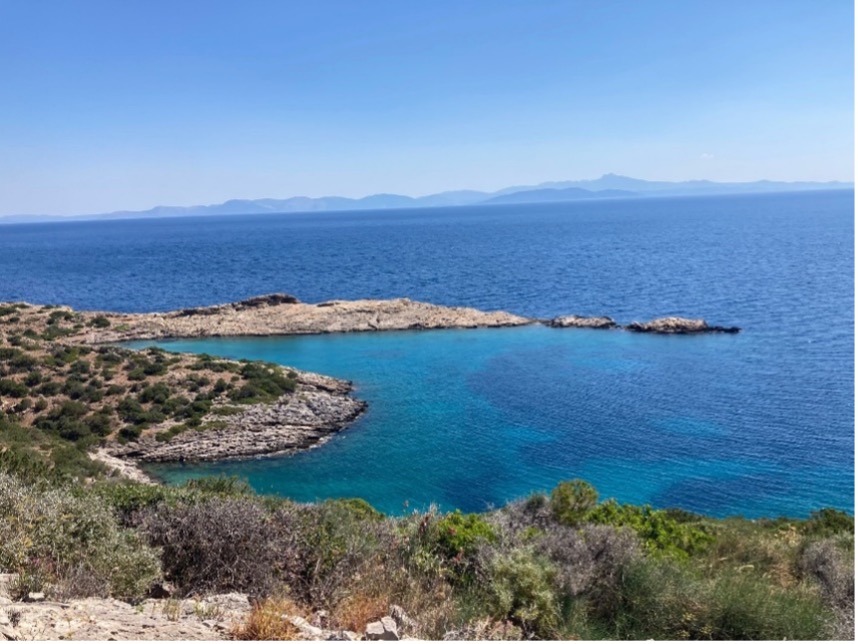 View of Evia from the Perati Massif. Photo: Hazel Evans.
I’ve really enjoyed how diverse the time periods featured in the survey are. As well as collecting finds, we are cataloguing ancient features in the landscape. So far we’ve featured a Mycenaean tomb and a Byzantine church, as well as visiting a prehistoric cave and a Frankish tower that will form part of the later years of the project’s survey area. It’s been really interesting to get a picture of the area’s entire history.
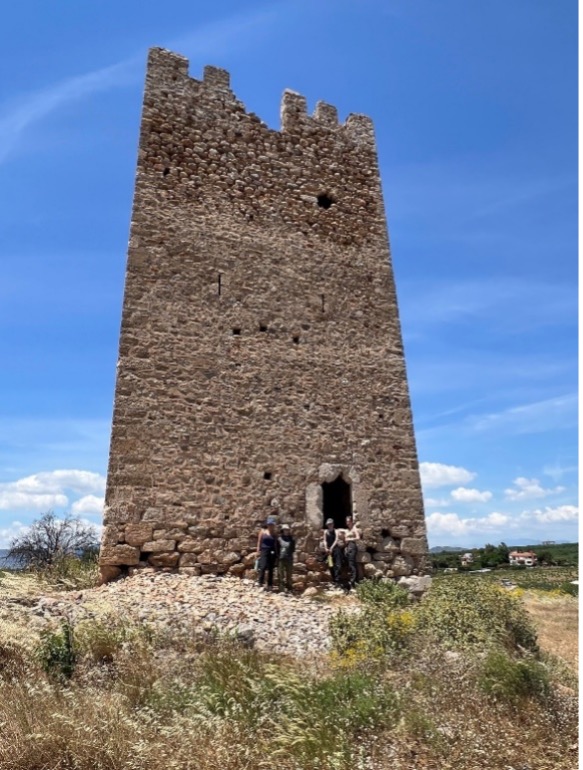 Medieval Frankish Tower. Photo: Hazel Evans.
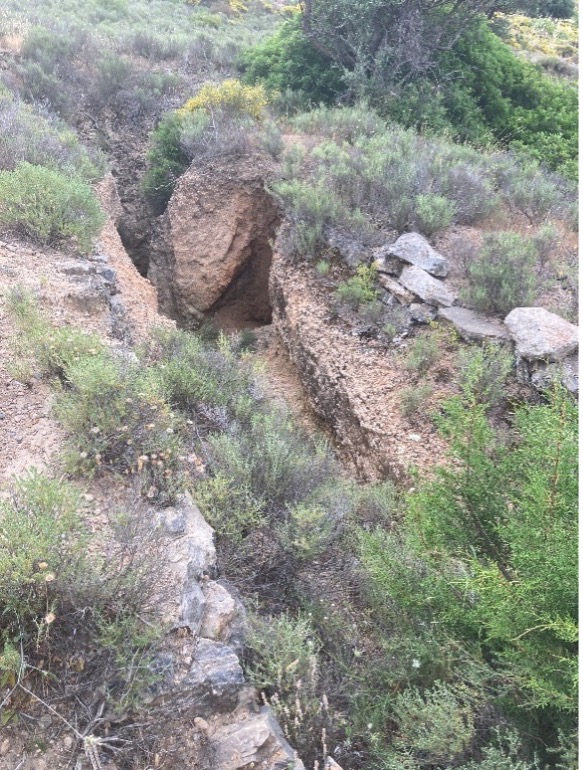 Chamber Tomb at Lapoutsi. Photo: Hazel Evans.
At the weekend we visited the nearby island of Euboea to visit several archaeological sites. We drove past the acropolis of Chalcis and arrived at the New Archaeological Museum. I really liked the design of the museum, as the artifacts were grouped by function, and displayed in a timeline that demonstrated change through time. We also stopped at the temple of Apollo Daphnephorus, and a nearby Hellenistic house with a gorgeous mosaic floor. Then we headed over to the Archaeological Museum of Eretria to see the famous centaur figurine from the Lefkandi burial.
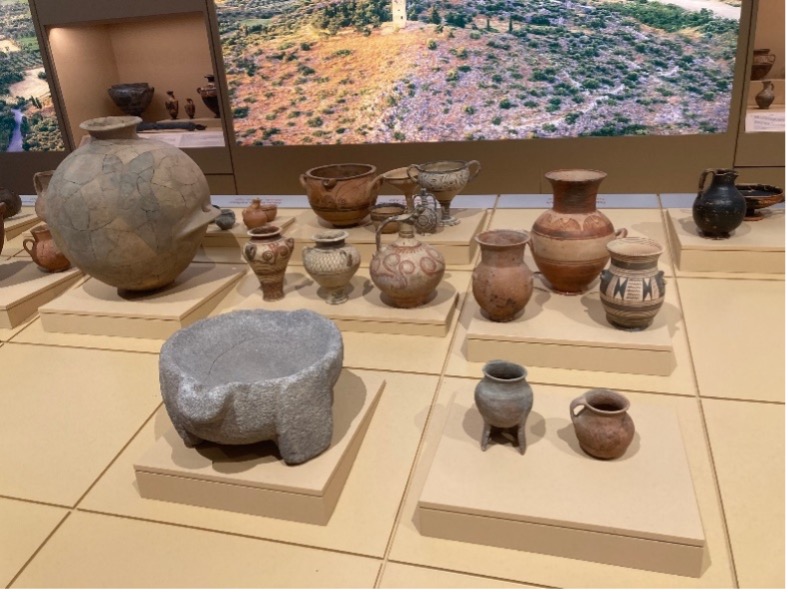 Objects from the Chalcis Museum. Photo: Hazel Evans.
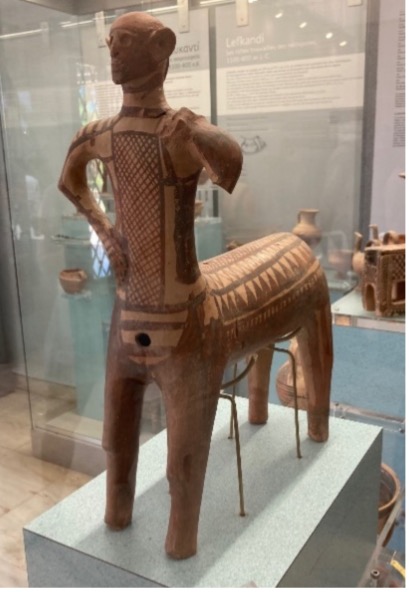 The Lefkandi Centaur from the museum at Eretria. Photo: Hazel Evans.
This week, I’m working in the Brauron Archaeological Museum cataloguing finds from ARTEMIS. Working with our survey material has really reminded me of why I love archaeology. Holding the pottery in my hand, I wonder who crafted each piece, and what meaning it would have held to the people who used it. I find it endlessly fascinating that we can understand how past peoples lived their lives through the material culture they leave behind.